Wednesday, 20 January 2016

Southern Summer, Argentina, Chile and Y Wladfa Gymreig 18th Jan

The days are now getting harder to chronicle because of overnight travel and lack of access to the Internet. I am calling this day the 18th but it will take in arrival at Puerto Madryn, that afternoon and the next day which is the trip to Penninsular Valdes.
I have described the transport arrangements and they served us very well. The apartment by contrast was disappointing. Rather cramped, no balcony as booked and wifi in the foyer area only. This makes a huge difference to me as I have to be online to write this. No doubt you are thinking, just stay offline!
We book the tickets for the trip tomorrow. It's a long day, 7.30 start,getting home about 12 hours later.
It turns out that there are only 4 of us on the trip. Daizie and Ruben, a Dutch couple and us. We can go in a smaller vehicle with just a driver /guide, who had terrific knowledge and spotted the wildlife immediately. Our first stop was the breeding ground of the Magallanic Penguins but on the way we saw;


Llamas or Guanaco as we call them over here.


Choique or Lesser Rhea.


Patagonian Cavy


Larger Hairy Armadillo


Sooty Shearwater  (wing span 95cms)


Female Vermillion Flycatcher living up to its name. The males have a beautiful bright red front.


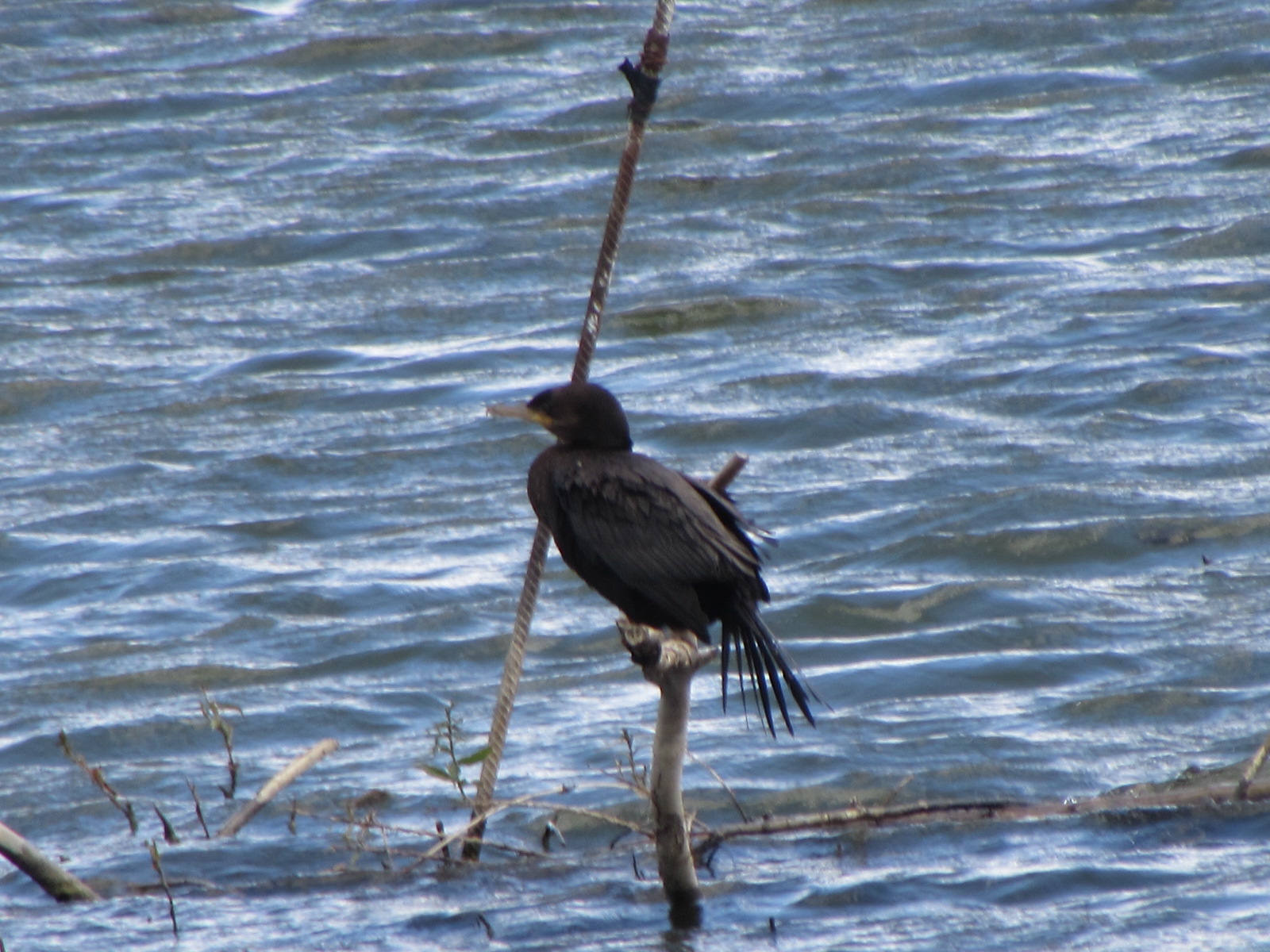
Neotropic Cormorant and now,the stars.


 See how close you can get to the chicks, no zoom used here. The adults stand 44 cm tall and the chicks soon reach this height.

 Parent and juvenile who has not made the shoreline yet and will soon be left to get on with it. It's swim or starve.

These two are not sunbathing, but keeping cool by panting like dogs.


Parents and juveniles who have made it to the shore and should make it until the Elephant seals, the Sea lions or the Orca get them. Also at this point on the coast are Elephant Seal breeding grounds.


Next we head for the North Point where there is a large Sea lion breeding colony. This is not only a visual feast, but an aural one as well. The roaring of the males in defence of their harems is distinctly leonine,as are their bushy manes. This beach is the only place in the world where Orcas are known to land on the beach to feed on the sea lions. This was caught on film by National Geographic  (thanks Fi), try Utube.
Next we drive to the south to Puerto Piramide for lunch followed by a boat trip.


 The boat allows us a very close encounter with more Sea Lions, we can see them, hear them, but especially smell them.


This little chap was running around unsuccessfully trying to find its mother. 


Above the Sea Lions,  a colony of Blue Eyed Cormorants nest on the cliff. 

Finally we look at Homo Sapiens at play. This activity is called snorkeling, where they search for prey and we can also observe a predatory activity called bombing. Here a Ruben bombs a Nigel!


This penninsular is most famous for observing the Southern Right Whale  (season finished mid December) and Orca  (season starts end of February). Frustratingly we know that Orca were spotted the day before we arrived and as we left we spoke to an Isreali couple who saw four trying to catch an Elephant Seal just where we were yesterday. The Elephant Seal escaped. 


Monday, 18 January 2016

Southern Summer, Argentina, Chile and Y Wladfa Gymreig 17th Jan

The Lonely Planet Guide sums up Rio Gallegos as not a town for tourists, more a place to pass through and move on elsewhere. That is about what we are doing except we have to about 10 hours here before the big bus ride.
Firstly I think the guide is a little unfair to Rio. We found a residual British Gentleman's club, a very quaint corrugated iron cathedral, what might have been a fascinating Military museum, a craft workshop and market for the Tehuelche indigenous people and finally a paleontology museum.


Me, enjoying the hospitality of the British Club.Founded in 1911 by a group of Brits from the Falklands  (sorry Malvinas ) who came to make use of their sheep farming skills. Some descendants are still members. Sadly the snooker table has now gone.


The Tehuelche ladies weaving their woollen garments. The products were excellent and much better priced than the tourist tat available elsewhere. We bought some artworks and pottery.


External and internal views of the Cathedral founded in 1880.


I was really keen to visit this museum and see how the Argentinians presented this conflict. Unfortunately the museum was closed for the month of January. So I'll never know.


See there is stuff other than the shops, military base and oil and coal to see in Rio Gallegos but now it is time for us to go. We have executive suite seats on the bus to Puerto Madryn. The journey takes 17 hours. Now some pictures of the suite. Think business class flying at 90 kms per hour along the ground. You get the wine and lousy food and a toilet that sucks your offerings off to  god knows where.


As the sun sets outside, I snuggle down to sleep in my now 180 ° bed. Lastly a strange conundrum with the digital clock above us. Anyone with suggestions that explain the conundrum please comment on this blog with your ideas. The clock  read 22.07 as we pulled out. We were 7 minutes late and the clock appeared to be 2 full hours fast. It continued to advance one hour on the hour until 32.00. The next hour was 00.00. What's this all about? I know that 2 to the power 5 is 32. Is this some form of decimal /binary time? Answers via the comment box or to me via email. Let us also not forget that today is Annabel Duce's 6th birthday so here's to you Annabel. 

Friday, 15 January 2016

Southern Summer, Argentina, Chile and Y Wladfa Gymreig 16th Jan

Dipping our toes into Agentinian long distance coach travel today for the first time but by no means the last. The 300+km journey from El Calafate to Rio Gallegos is scheduled to take 4 and a half hours. Due to leave at 13.30 it doesn't arrive from RG until 13.40 but like a good Ryanair flight it's pulling out at 13.45. However its better than Ryanair in almost all respects except it doesn't fly. The seating is spacious and comfortable. Seats are bookable in advance, in fact I booked the two upstairs front seats from my desk at home the day after the Agentinian government floated the Peso on the international exchange markets and its value instantly sunk to the black market value. That was on the 17th December 2015.  I digress, so a farewell to El Calafate with some pictures.


This was the hotel, we had the room with the open window, and opposite us is this war memorial. It's getting rather shabby already, it commemorates only one war. Remember 1984?


The six little plaques are from separate authorities or institutions. I have enlarged one that makes their point quite succinctly. 


For me it just brings home the futile failure of war to solve a problem that it is the politicians job to resolve. 


Helen guarding the cases and patiently waiting for the bus that should be here.


Here you can see the double decker we will ride with for the next few hours. This Internet booking from the other side of the planet really works and we have the seats I ordered. Must try booking the Lunar Sea of Tranquility cruise next.


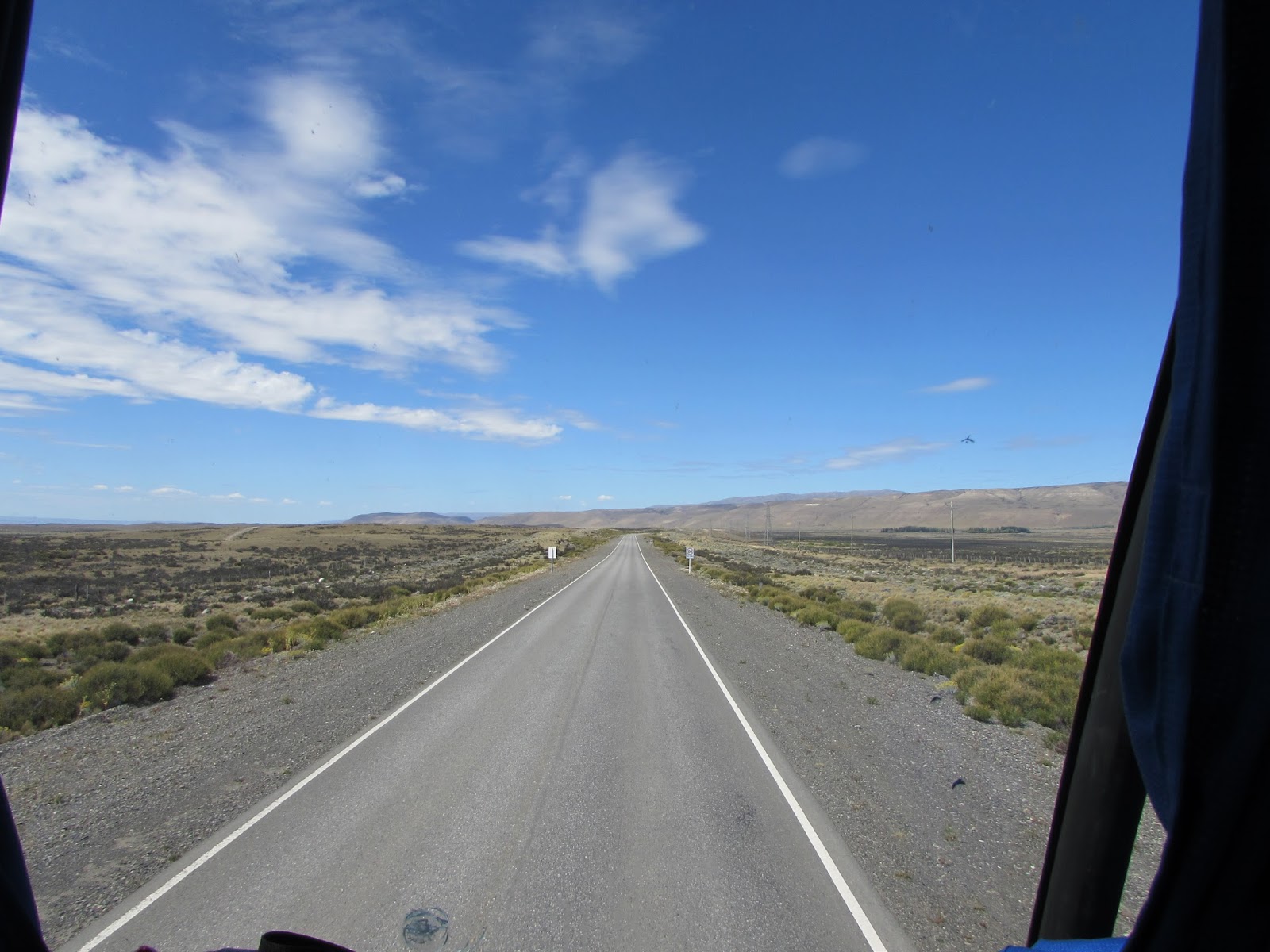
Come to think of it, this could be what the lunar surface is like. Mile after mile after mile of virtually nothing rather reminds me of the Australian outback. As we leave El Calafate the bus stops at a permanent police Checkpoint, like a border crossing. Everyones documents are checked then we're on our way. 


The same thing occurred as we approached Rio Gallegos. I am beginning to get that police state feeling.  A short taxi ride takes us to the Hotel Commercio which proves to be a lot smarter than I anticipated. Check out the photos, the Louis Quartoise furnishings, jacuzzi bath, (which we both enjoyed) and very spacious bedroom. 


Now let's see what Rio Gallegos has to offer us. We have until 8pm tomorrow to find out. 

Thursday, 14 January 2016

Southern Summer, Argentina, Chile and Y Wladfa Gymreig 15th Jan

Today is the day of the glacier! The first stage is to catch a bus from the bus station to the National Park car park.  After an hour we reach the entrance where we have then to buy our tickets. A further half hour and we get to the car park and reception. See first photo below.


After some lunch we board the shuttle bus down the hill where you can see the glacier from lake level. It is also from here you can ride the boat to get up close and personal with a calving glacier. But first we'll look at the whole thing from the car park.


Now we're down the bottom just before boarding.  See how kind the weather has been to us.


You might recognise me sitting at the gunwale of the boat. The milky colour of the water is a glacial feature caused by the suspended salts and residue scraped from the mountain side.


What calving actually means is that parts are continually falling away from the glacier snout. These can be relatively small or the size of a block of flats. When they go first you hear a noise like an explosive crack followed by a roar and huge splash. You see what looks like smoke with a tidal wave flowing away from the snout. These events take place every five to ten minutes but you would be exceptionally lucky to catch one on camera.

Besides the colouration in the water there is the colour of the ice itself. The angle that light waves are defracted through the ice depends on its density. High density, pure water, will look this bright blue that you can see below.


I was reminded of those slot machines that you used to get on piers,with piles of pennies all stacked up so nearly ready to fall as you roll yours on, but they never quite do,until.........Crash! 


Here we are looking up to see how the glacier is formed. Over the top there is Chile and the Pacific Ocean. The moist wind blows onto the coast, rises and cools over the mountains. The moisture condenses and falls as snow. The weight of snow turns to ice which then slides down the mountain. There you have it! But it's a very slow process usually taking hundreds of years. This one however is a quickie. It moves at two metres a day. A Concord among glaciers. Any further questions about glaciers please address to Thomas Duce care of Terrington St Clements Academy. Incidently the same applies to latitude!

I would like to dedicate this blog to my good friend and most assiduous commentator Carol Rodgers. Thanks for the encouragement.

Wednesday, 13 January 2016

Southern Summer, Argentina, Chile and Y Wladfa Gymreig 12/13 Jan

You don't just go to El Calafate, you have to make a very positive effort to get there. It is among the southernmost communities in the world at 50° S. Ushuaia at 54° is the most southerly. It is a drive of several hours from the next nearest town. We flew in but will be busing out. Most of Tuesday was taken up by our flight which lasted for three hours and went smoothly. The airport was more of an airfield though the small terminal was new. They have about 15 flights per day. Most people come chiefly to experience the Perito Moreno glacier which "calves" into Lago Argentina. More of this tomorrow when I hope you can as close as possible share the experience with us. People also come to climb or walk in the relatively close (200kms) Fitzroy Range, or the Torres del Paine National Park. So El Calafate is a bit like Betws y Coed without the trees but with the wind. No problem buying your North Face or Columbia gear but there's only one supermarket. You get a distinct feel of the frontier town here. Have a look around.


The view from the bedroom window, plus a little zoom.


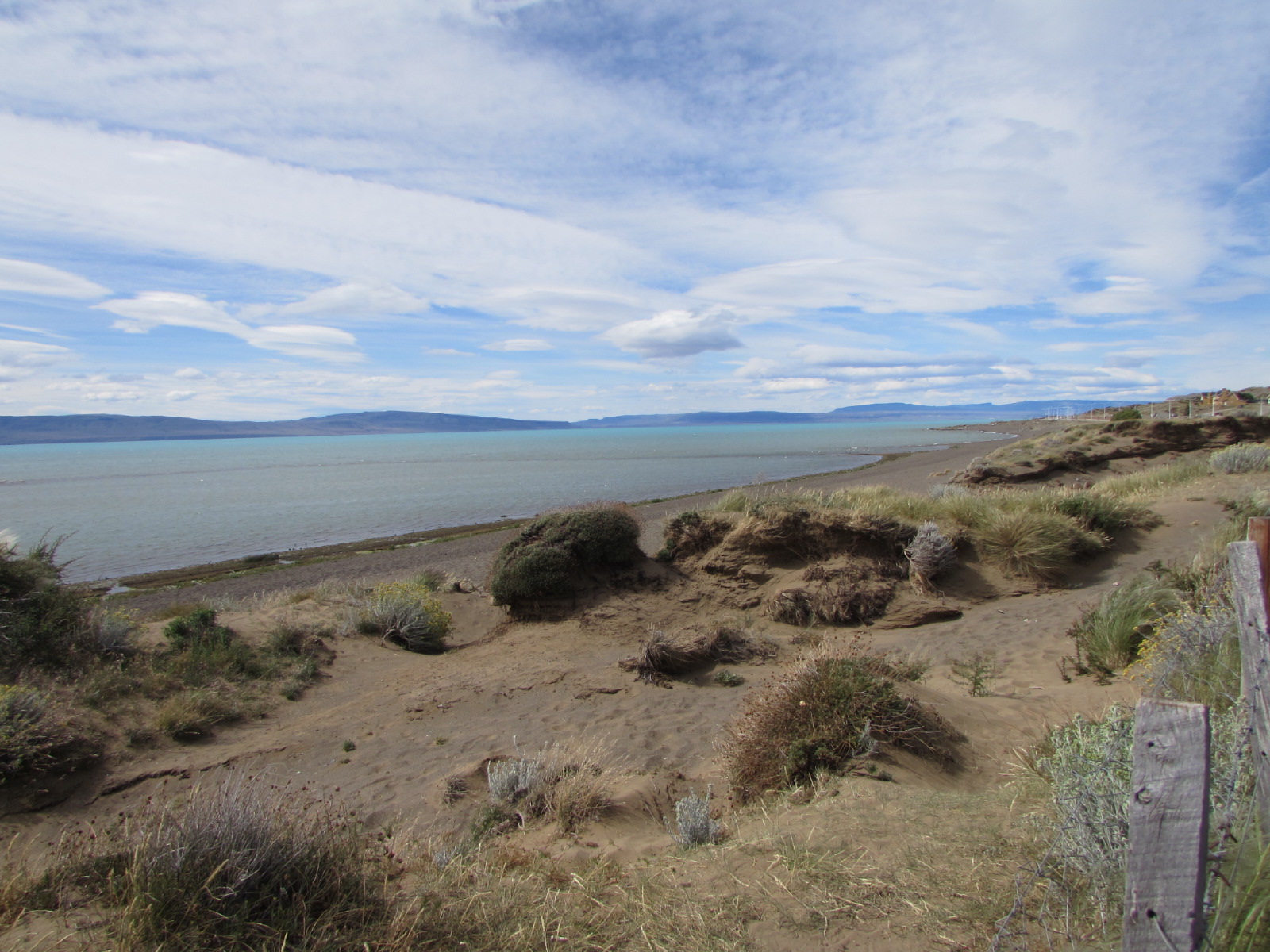
This is the view from the lake towards town 


And this is the view the opposite way. Besides the aforementioned attractions you can hire bikes, go pony trekking or visit the nature reserve at a series of lagoons beside the lake. We decided to opt for the birdwatching and what a treat we had. It was half an hours walk from the hotel so we had some lunch at this taverna on the way. 


We have done quite a few bird sanctuaries round the world but never one as abundant and varied as this. Moreover the accessibility of the birds was superb. We must have seen in excess of 30 species. Enjoy this cornucopia of Patagonian and Antarctican birds. 


Three species visible above, Black- necked Swan, Coscorba Swan, and the Red-fronted Coot.


Chilean Flamingo 


Male Upland Goose


Southern Lapwing

Neotropic Cormorant
Andanean Duck
Upland Gosling

Cinereous Harrier
There were a lot of these Harriers and both their flight and calling was spectacular. Although they came close to us,they were very hard to photograph on the wing. It transpired that they were nesting in the reeds. This entry has taken a long time to write as the pictures take a while to upload because the wifi is rather slow. Hear that UK, wifi at 50°S and not another township for 200kms! 


Ibis


Patagonian Sierra Finch